
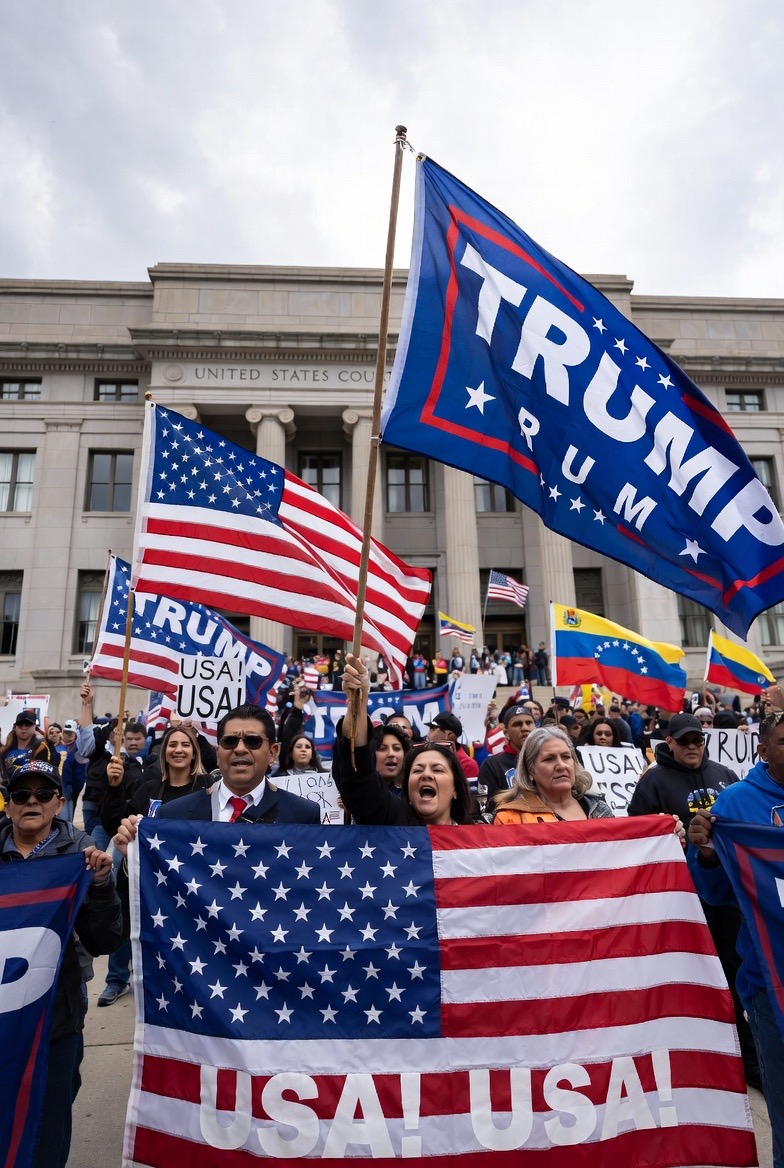
New York, NY – January 5, 2026 — Supporters gathered outside the Daniel Patrick Moynihan United States Courthouse in Manhattan today as deposed Venezuelan President Nicolás Maduro entered a historic arraignment and pleaded not guilty to U.S. federal drug trafficking charges.
Dozens of demonstrators — including Venezuelan expatriates, political activists, and U.S. citizens — rallied outside the courthouse and nearby detention facilities in New York City. Some waved Venezuelan flags and held signs denouncing the U.S. capture and federal prosecution of Maduro, while others expressed support for holding him accountable for alleged crimes.
Maduro’s Court Appearance and Plea
Maduro and his wife, Cilia Flores, appeared in federal court after being brought from U.S. custody in New York following a surprise military operation on January 3, led by U.S. forces. Maduro pleaded not guilty to multiple narcotics-related charges — including narco‑terrorism conspiracy and cocaine importation conspiracy — and insisted on his innocence.
Speaking through an interpreter, the former Venezuelan president declared, “I’m innocent. I am not guilty. I am a decent man,” reaffirming his stance that his removal and capture were unlawful.
The federal judge Alvin K. Hellerstein accepted the not guilty plea and set the next court date for March 17, 2026. Both Maduro and Flores are to remain in custody pending future proceedings.
Rally Outside the Courthouse
Supporters and Opponents
Crowds outside the courthouse reflected sharply divided views:
- Supporters of Maduro argued that the U.S. intervention and capture were illegal, labeling his detention a violation of international law. They voiced concerns over U.S. motives and sovereign rights, with many chanting slogans and demanding Maduro’s release.
- Opponents of Maduro, including Venezuelan expatriates and U.S. citizens, saw the arraignment as overdue accountability for alleged narcotics trafficking and corruption — though these supporters were less visible in tonight’s New York rally.
The crowd size fluctuated through the day, with media coverage showing clusters of passionate demonstrators carrying placards, chanting, and engaging with reporters.
Political and Legal Fallout
The dramatic courtroom appearance underscores a broader geopolitical clash between the United States and Venezuela’s contested leadership. The Trump administration, which has not recognized Maduro as Venezuela’s legitimate head of state following the 2024 election, justified the operation as part of a broader anti‑drug and security strategy.
International reactions have been mixed, with critics warning that the U.S. military action and prosecution may set dangerous precedents in international law and diplomacy.
What’s Next
Maduro’s trial is expected to stretch into 2026, with legal battles over jurisdiction, immunity claims, and international diplomatic ramifications likely to intensify. The next scheduled hearing on March 17 will be critical as prosecutors continue to build their case — while Maduro’s defenders prepare broader legal arguments challenging the basis of the U.S. prosecution.