
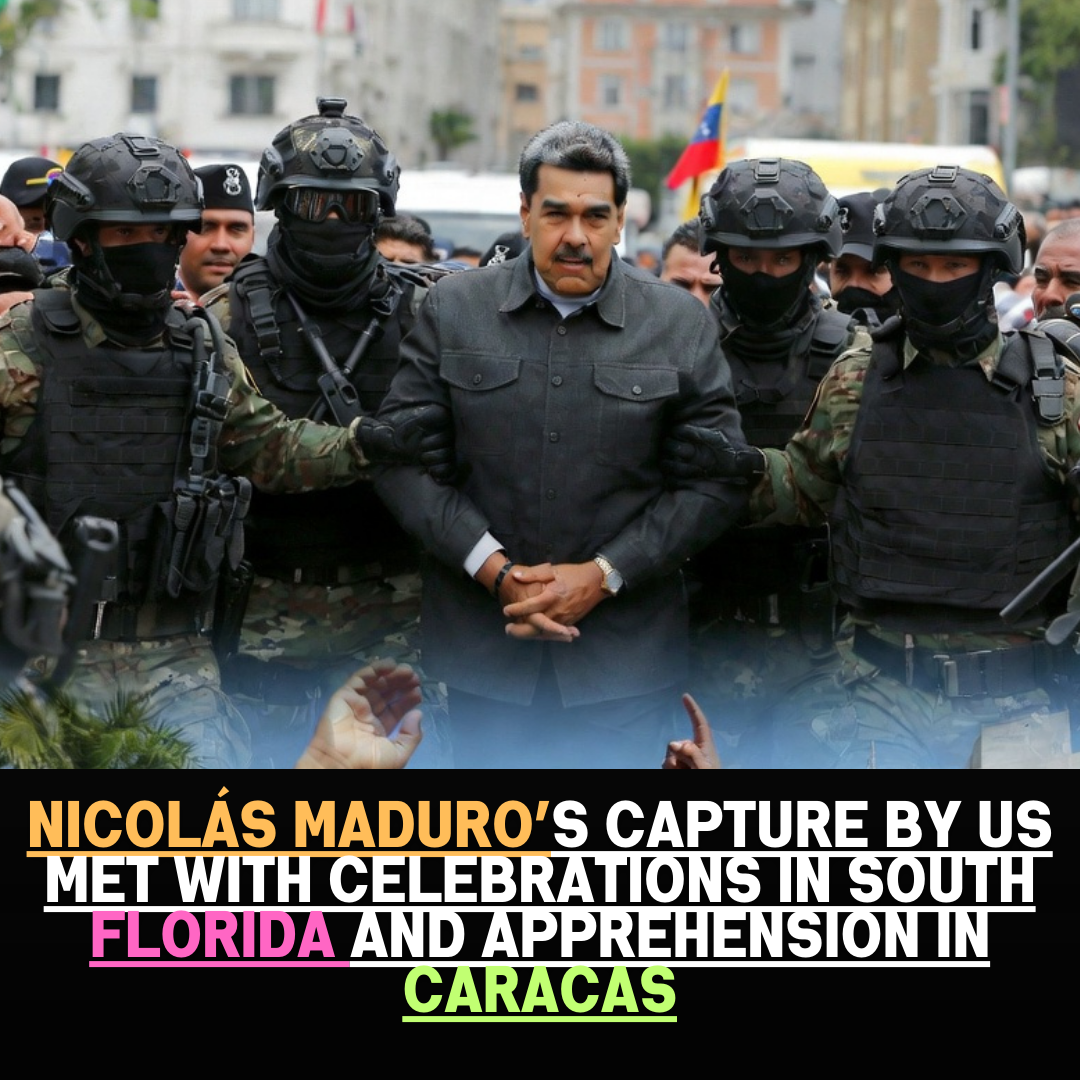
The recent events surrounding Venezuelan leader’s detention by the US have sparked mixed reactions in South Florida, a region with a significant Venezuelan community.
The news has brought forth a wave of celebrations and concerns among the local population, highlighting the complexities of US intervention in Venezuela.
As the situation continues to unfold, it is essential to understand the implications of this event on the Venezuelan community in South Florida.
Key Takeaways
- The detention of the Venezuelan leader has sparked mixed reactions in South Florida.
- The Venezuelan community in the region has expressed both celebrations and concerns.
- The event highlights the complexities of US intervention in Venezuela.
- The situation has significant implications for the local Venezuelan community.
- The news has brought forth a range of emotions among the local population.
The Dramatic Capture: How US Forces Apprehended Nicolás Maduro
In a daring operation, US forces apprehended Nicolás Maduro, marking a significant turn in the complex saga of Venezuela’s political turmoil. The event has been described as a crucial step in addressing the longstanding issues under Maduro’s regime, including Venezuela’s economic collapse.
Operation Details and Timeline
The operation to capture Maduro was the result of extensive planning and coordination among US agencies. According to officials, the plan involved multiple branches of the US military and intelligence services working together to execute the apprehension.
“This was a complex operation that required precision and careful execution,” said a US official, highlighting the challenges faced during the mission.
Official US Statements on the Capture
The US government has released several statements regarding the capture of Maduro. Officials have emphasized that the operation was a significant step towards restoring democracy in Venezuela.
“The capture of Nicolás Maduro marks a new chapter in our efforts to support the Venezuelan people’s quest for freedom and prosperity,” said a spokesperson for the US Department of State.
These statements underscore the US commitment to intervening in Venezuela to address the issues under Maduro’s leadership, including human rights concerns and economic mismanagement.
Who is Nicolás Maduro: A Background on Venezuela’s Controversial Leader
Nicolás Maduro, the current president of Venezuela, has been a figure of international controversy due to his authoritarian governance and handling of the country’s economic crisis. Understanding his background is crucial to grasping the complexities surrounding his capture by US forces.
Maduro’s Rise to Power
Nicolás Maduro’s ascent to the presidency was facilitated by his close relationship with his predecessor, Hugo Chávez. After Chávez’s death in 2013, Maduro won a narrow election, promising to continue Chávez’s socialist policies. His rise was marked by allegations of electoral irregularities, setting the tone for his controversial tenure.
Human Rights Concerns Under His Rule
Maduro’s presidency has been criticized for widespread human rights abuses. The government has been accused of suppressing political opposition, arresting critics, and limiting freedom of speech. These actions have drawn international condemnation and raised concerns about the state of democracy in Venezuela.
Venezuela’s Economic Collapse
Under Maduro, Venezuela has experienced one of the most severe economic crises in recent history. Mismanagement, corruption, and an over-reliance on oil exports have led to hyperinflation, food shortages, and a significant decline in living standards. The economic collapse has prompted millions to flee the country, creating a massive diaspora.
The combination of Maduro’s authoritarian rule, human rights abuses, and economic mismanagement has led to a complex situation in Venezuela, with far-reaching implications both domestically and internationally.
Nicolás Maduro’s Capture by US Met with Celebrations in South Florida and Apprehension
The capture of Nicolás Maduro by US forces sent shockwaves through South Florida’s Venezuelan diaspora, eliciting a mix of joy and concern. This complex reaction reflects the diverse perspectives within the community regarding Maduro’s rule and the implications of his capture.
Scenes from Doral and Little Havana
In the vibrant streets of Doral and Little Havana, the news of Maduro’s capture was met with visible celebrations. Venezuelan flags waved high, and crowds gathered to share their reactions. The atmosphere was electric, with some people expressing relief that a figure they held responsible for their country’s turmoil was finally being held accountable.
Interviews with Celebrating Venezuelan-Americans
Venezuelan-Americans in South Florida shared their thoughts on Maduro’s capture, with many expressing a sense of justice being served. “This is a moment we’ve been waiting for,” said Maria Rodriguez, a Venezuelan-American resident of Doral. “It’s a step towards freedom for our country.”
Others, like Carlos Sanchez, highlighted the human rights abuses under Maduro’s rule, stating, “This is a victory for those who suffered under his regime.”
Social Media Reactions and Viral Moments
On social media, the news of Maduro’s capture sparked a flurry of reactions. Twitter and Facebook were filled with posts from Venezuelan-Americans and supporters worldwide, many of whom used hashtags like #MaduroCaptured and #VenezuelaLibre. Memes and viral videos captured the celebratory mood, with some users humorously comparing Maduro’s capture to scenes from action movies.
The social media frenzy underscored the global interest in Venezuela’s political developments and the solidarity among Venezuelans abroad.
Voices of Concern: Mixed Reactions Among South Florida Communities
As news of Nicolás Maduro’s capture by US forces spread, the communities in South Florida reacted with a mix of emotions, ranging from celebration to concern. The diverse reactions underscore the complexity of the issue and the deep connections many in South Florida have with Venezuela.
Fears of Political Instability and Violence in Venezuela
The capture of Maduro has raised concerns about the potential for political instability and violence in Venezuela. Many are worried that the power vacuum could lead to unrest or even conflict.
Concerns from Political Analysts
Political analysts in South Florida have expressed concerns about the implications of Maduro’s capture on the political landscape of Venezuela. “The situation is volatile, and there’s a real risk of instability,” said one analyst. The international community needs to be prepared to respond to any developments.
Community Leader Perspectives
Community leaders have also weighed in, with some expressing concern about the potential impact on their communities. “We’re worried about the safety of our families back in Venezuela,” said Maria Rodriguez, a community leader in Miami. Her sentiments were echoed by many who have family members still living in Venezuela.
Concerns About Family Members Still in Venezuela
For many Venezuelans living in South Florida, the capture of Maduro has brought personal concerns to the forefront. With family members still in Venezuela, they worry about the potential consequences of the power vacuum. As one resident noted,
“I’m worried about my family’s safety. The situation is already difficult, and this could make it worse.”
The mixed reactions in South Florida reflect the complexity of the issue and the deep connections between the local community and Venezuela. As the situation continues to unfold, the concerns and hopes of the community will remain a critical aspect of the story.
Political Implications for US-Venezuela Relations
The apprehension of Maduro marks a critical juncture in US-Venezuela relations, raising questions about the future of diplomatic ties between the two countries. As the situation unfolds, the international community watches closely, aware that the outcome could have significant implications for global politics and economies.
Diplomatic Fallout and Official Responses
The capture of Maduro is likely to provoke a strong reaction from Venezuela’s government, potentially leading to a deterioration in diplomatic relations. Official responses from both the US and Venezuela will be crucial in determining the next steps in this unfolding drama.
In the immediate aftermath, the US State Department issued a statement calling for calm and urging Venezuelans to remain peaceful. Meanwhile, Venezuelan officials have condemned the action as a violation of their country’s sovereignty. The diplomatic fallout could be severe, with potential expulsions of diplomats and closure of embassies.
| Country | Immediate Response | Potential Long-term Impact |
| United States | Statement calling for calm | Increased influence in Venezuelan affairs |
| Venezuela | Condemnation of US actions | Deterioration of diplomatic relations |
Impact on Oil Markets and Trade Relations
Another critical area affected by Maduro’s capture will be the oil markets and trade relations. Venezuela is one of the world’s largest oil producers, and any disruption in its production could have significant implications for global oil prices.
The US has been a major player in Venezuelan oil imports, and the capture of Maduro could lead to a reevaluation of these trade relations. Potential sanctions or changes in trade policies could impact not just Venezuela but also the global energy market.
As the situation continues to evolve, the impact on oil markets and trade will be closely monitored by economists and policymakers worldwide.
South Florida’s Venezuelan Community: Demographics and Influence
In South Florida, the Venezuelan diaspora has established itself as a major demographic and economic influence. The community’s growth has been remarkable, with significant numbers settling in Miami-Dade and Broward Counties.
Growth of Venezuelan Diaspora in Miami-Dade and Broward Counties
The Venezuelan community in South Florida has experienced rapid growth over the past decade. According to recent statistics, Miami-Dade County is home to one of the largest Venezuelan populations outside of Venezuela. This demographic shift has contributed to the cultural and economic vibrancy of the region. Many Venezuelans have brought with them their entrepreneurial spirit, contributing to the local economy through new businesses and investments.
Political and Economic Impact on Local Communities
The Venezuelan diaspora has not only reshaped the demographic landscape but also significantly impacted local politics and economy. Venezuelan-Americans have become a crucial voting bloc, influencing local elections and policy decisions. Economically, they have contributed to the growth of various industries, from real estate to retail.
“The Venezuelan community has been a driving force in South Florida’s economic growth, bringing with them a strong work ethic and entrepreneurial drive.” – Local Business Owner
The community’s influence extends beyond economics, with many Venezuelan-Americans actively engaging in cultural and social initiatives that enrich the fabric of South Florida’s society.
Historical Context: US Interventions in Latin America
The United States has a long history of intervening in Latin American affairs, a practice that has shaped the political landscape of the region. This history provides valuable context for understanding the recent capture of Nicolás Maduro.
Previous US Actions Against Foreign Leaders
The US has a history of taking decisive actions against foreign leaders it perceives as threats. For instance, Operation Just Cause in 1989 led to the ousting of Manuel Noriega in Panama. Similarly, the CIA-backed coup in 1953 removed Prime Minister Mohammad Mosaddegh in Iran.
These actions demonstrate a pattern of US intervention in the affairs of other nations when deemed necessary for national or regional security interests.
Comparisons to Panama, Cuba, and Other Interventions
US interventions in Latin America have varied in their execution and outcomes. A comparison of these interventions can provide insights into the potential consequences of such actions.
| Country | Year | Nature of Intervention |
| Panama | 1989 | Military invasion to remove Manuel Noriega |
| Cuba | 1961 | Failed CIA-backed invasion at the Bay of Pigs |
| Dominican Republic | 1965 | US military intervention to prevent communist takeover |
These historical examples illustrate the complex and often controversial nature of US interventions in Latin America. Understanding these precedents is crucial for assessing the implications of recent actions against Nicolás Maduro.
Legal Proceedings: What Happens Next for Maduro
The apprehension of Maduro marks the beginning of a challenging legal journey, fraught with diplomatic and jurisdictional complexities. As the United States navigates the intricacies of legal proceedings against a foreign leader, several key issues come to the forefront.
Potential Charges and Court Proceedings
Maduro may face a range of charges in US courts, including drug trafficking, money laundering, and crimes against humanity. The legal process will involve complex jurisdictional issues, as well as the gathering and admissibility of evidence from Venezuela.
- Extradition proceedings, if requested by Venezuela or other countries
- Potential for a trial in the United States, depending on the charges
- International cooperation in gathering evidence and testimony
As noted by legal expert Carlos Hernandez, “The case against Maduro will be a landmark test of international criminal law, with significant implications for global justice.”
International Law Considerations
The capture and prosecution of Maduro raise important questions under international law. Issues of sovereignty, diplomatic immunity, and human rights will be central to the legal debate.
“The Maduro case will challenge the boundaries of international law, particularly in relation to the prosecution of heads of state,” said
Dr. Maria Rodriguez, International Law Specialist
.
The legal proceedings will need to balance the pursuit of justice with the complexities of international diplomacy and the rights of the accused.
Power Vacuum in Venezuela: Scenarios for Leadership Transition
With Maduro in US custody, Venezuela faces a significant power vacuum, prompting speculation about the country’s political trajectory and potential new leaders. The current political landscape is complex, with various factions vying for control.
Current Political Structure and Potential Successors
Venezuela’s political structure is currently dominated by the Maduro regime, but with his capture, the landscape is set to change. Potential successors are being discussed among various political circles. Juan Guaidó, who has previously been recognized as the interim president by several countries, is one of the names being considered. Other potential leaders include members of the opposition and military figures who could potentially seize power.
The political transition will be influenced by both internal and external factors, including the stance of the military and international community. The role of the National Assembly and other governmental institutions will be crucial in determining the next steps.
International Recognition and Support Issues
The international recognition of Venezuela’s new leadership will be a critical factor in the transition process. Countries like the United States and members of the European Union have already shown their stance on Maduro’s regime, and their responses to new leadership will be significant. The support of international organizations such as the Organization of American States (OAS) could also play a crucial role in legitimizing the new government.
Moreover, the economic implications of a leadership change will be substantial, given Venezuela’s reliance on oil exports and its current economic crisis. International support, including potential economic aid, will be vital for the stabilization of the country under new leadership.
Conclusion: The Road Ahead for Venezuela and South Florida Relations
The capture of Nicolás Maduro by US forces has sent shockwaves throughout Venezuela and South Florida. As the news continues to unfold, the Venezuelan community in South Florida is experiencing a mix of emotions, from celebration to concern.
The future of Venezuela hangs in the balance, with a potential power vacuum raising questions about leadership transition and international recognition. The US-Venezuela relations are poised to undergo significant changes, impacting not only the two nations but also the global oil market and trade relations.
In South Florida, the Venezuelan diaspora will likely continue to play a crucial role in shaping the community’s response to Maduro’s capture. As the situation develops, it is essential to consider the potential implications for regional stability and the economic impact on local communities.
As the international community watches, the road ahead for Venezuela and South Florida relations will be shaped by the unfolding events. The US will need to navigate the complex web of diplomatic relations, ensuring a smooth transition and minimizing potential instability.
The coming days and weeks will be critical in determining the course of history for Venezuela and its relations with the US and South Florida.
FAQ
What were the immediate reactions to Nicolás Maduro’s capture in South Florida?
The reactions were mixed, with some Venezuelan-Americans celebrating the event, while others expressed concerns about the potential consequences, including political instability and violence in Venezuela.
How did the US government respond to Maduro’s capture?
The US government released official statements regarding the capture, detailing the operation and the charges against Maduro, and outlining the diplomatic fallout and potential next steps.
What are the potential charges against Maduro?
Maduro may face charges related to human rights abuses, corruption, and other crimes committed during his rule in Venezuela, with the US government likely to pursue extradition.
How might Maduro’s capture affect the Venezuelan economy?
The capture could lead to further economic instability in Venezuela, potentially impacting oil markets and trade relations, as well as affecting the local economies in South Florida with significant Venezuelan populations.
What is the historical context of US interventions in Latin America?
The US has a history of intervening in Latin American affairs, including actions against foreign leaders, such as in Panama and Cuba, which provides a broader context for understanding the current situation with Maduro.
How might the power vacuum in Venezuela be filled after Maduro’s capture?
The transition could involve various potential successors and may be influenced by international recognition and support, with the current political structure in Venezuela playing a significant role in determining the outcome.
What are the implications of Maduro’s capture under international law?
The capture raises complex questions under international law, including issues related to sovereignty, extradition, and human rights, which will likely be debated in the legal proceedings against Maduro.
How has social media reacted to Maduro’s capture?
Social media platforms have seen a mix of reactions, with some users celebrating the capture, while others have expressed concerns and fears about the potential consequences, reflecting the diverse views within the Venezuelan-American community.
What is the demographic significance of the Venezuelan community in South Florida?
The Venezuelan diaspora in Miami-Dade and Broward Counties has grown significantly, exerting a notable political and economic influence on local communities, which will likely be affected by the developments surrounding Maduro’s capture.