
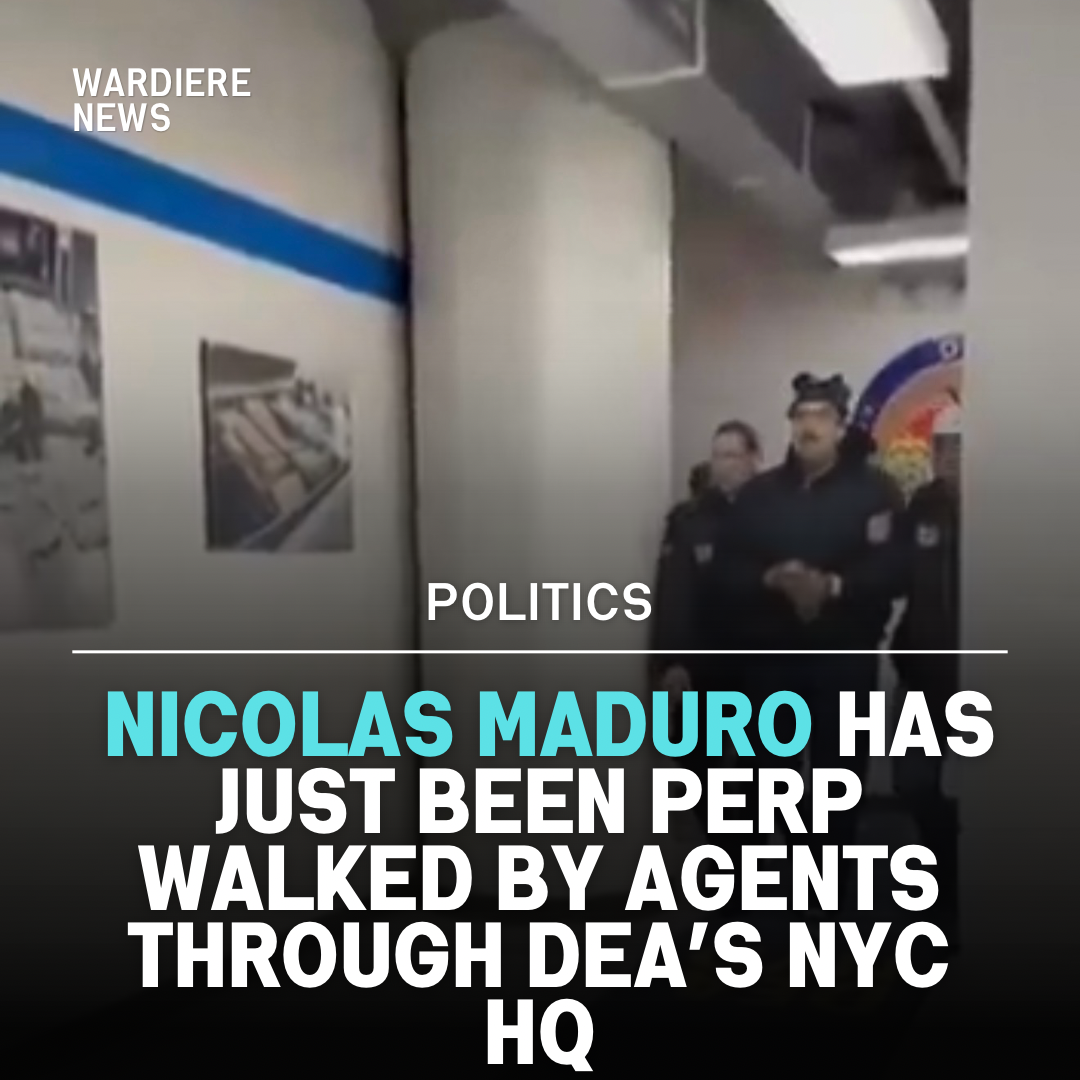
In a stunning turn of events, Nicolás Maduro, the controversial president of Venezuela, was arrested and escorted in a perp walk by agents from the Drug Enforcement Administration (DEA) at their New York City headquarters. This unprecedented event marks a significant escalation in efforts to hold accountable political leaders linked to international drug trafficking. The dramatic arrest has captured global attention, with many questioning the implications for U.S.-Venezuela relations and the broader war on drugs.
The Arrest of Nicolás Maduro: A Breakdown
On [date], the DEA apprehended Nicolás Maduro on charges of drug trafficking, money laundering, and other criminal activities linked to the Venezuelan government. Known for his controversial tenure as president, Maduro has been a figure of international scrutiny, with numerous reports linking his regime to the cartel de los soles, a powerful Venezuelan drug trafficking organization.
Key details of the arrest:
- Date and Location: Nicolás Maduro was arrested at DEA headquarters in New York City on [specific date].
- Charges: The charges against Maduro include drug trafficking, conspiracy, and corruption.
- Authorities Involved: The arrest was made by agents from the DEA, with assistance from other law enforcement agencies.
- Public Reaction: The arrest has sparked outrage in Venezuela, with many supporters of Maduro claiming the charges are politically motivated.
Nicolás Maduro’s Role in International Drug Trafficking
Maduro’s arrest is a culmination of years of investigations into Venezuela’s role as a central hub for drug smuggling, particularly for the Cartel de los Soles. Under Maduro’s regime, Venezuela has been accused of facilitating the transport of illicit drugs from South America to the United States and Europe. The DEA had previously placed a $15 million bounty on Maduro’s head for his role in global drug trafficking, marking him as one of the most wanted fugitives in the world.
Maduro’s alleged involvement in these crimes has further isolated his government from the international community. The arrest of such a high-ranking official demonstrates the U.S. government’s commitment to curbing the global drug trade and sending a message to corrupt regimes.
What Happens Next?
The perp walk of Nicolás Maduro through the DEA’s New York City HQ is just the beginning of what promises to be a complex legal and political battle. While Maduro’s arrest is a significant victory for international drug enforcement agencies, it raises questions about what will happen next:
- Extradition Proceedings: Maduro faces potential extradition to the U.S. to stand trial for his alleged crimes. However, the Venezuelan government has already vowed to prevent such an outcome.
- Diplomatic Fallout: Venezuela, under Maduro’s leadership, is likely to respond with diplomatic protests. The incident could further damage relations between the U.S. and Venezuela, which have been strained for years.
- Implications for Global Drug Trafficking: The arrest of such a high-profile figure sends a strong message to other political leaders involved in the international drug trade.
The Impact on U.S.-Venezuela Relations
The arrest has the potential to escalate already tense relations between the United States and Venezuela. Diplomatic tensions between the two nations have been high for over a decade, and Maduro’s arrest is expected to worsen these tensions. The U.S. has consistently accused the Venezuelan government of being involved in narcotics trafficking, while Venezuela claims the U.S. seeks to undermine its sovereignty.
Public Opinion and Reactions
The arrest has sparked mixed reactions globally:
- Venezuela: Maduro’s supporters have decried the arrest as politically motivated, claiming that the U.S. is trying to destabilize Venezuela.
- United States: Many Americans, especially those concerned with the global drug trade, view the arrest as a significant achievement in the fight against drug cartels and international crime.
- International Community: Foreign governments are closely watching how the situation develops, especially regarding the potential diplomatic consequences.
Conclusion: A Turning Point in Global Drug Enforcement
The arrest of Nicolás Maduro by DEA agents marks a pivotal moment in the war on drugs and international law enforcement. It highlights the ongoing struggle to combat drug trafficking at the highest levels of government. The perp walk through the DEA’s New York City HQ is not just a symbol of the arrest of a leader but also a powerful reminder that the fight against global drug networks knows no borders.
As the legal and diplomatic aftermath of this event unfolds, the world will be watching closely to see how the U.S. government, the Venezuelan regime, and the international community respond to this seismic shift in international justice.